Health & Wellness
The Undervalued Medical Power of Muscle
Sep
If you know anything about me, anything at all, you know I’m a huge proponent of weight lifting—all ages, male, female, or in between, anytime, anyplace, anywhere. I was a career competitive bodybuilder on the international stage winning a myriad of titles across the globe and in the U.S. I started seriously lifting at age of 20 and never looked back.
So let’s talk about muscle. Because the plain truth is what muscle does on the inside is more important than what people see on the outside.
THE MASSIVE LIFT OF MUSCLE
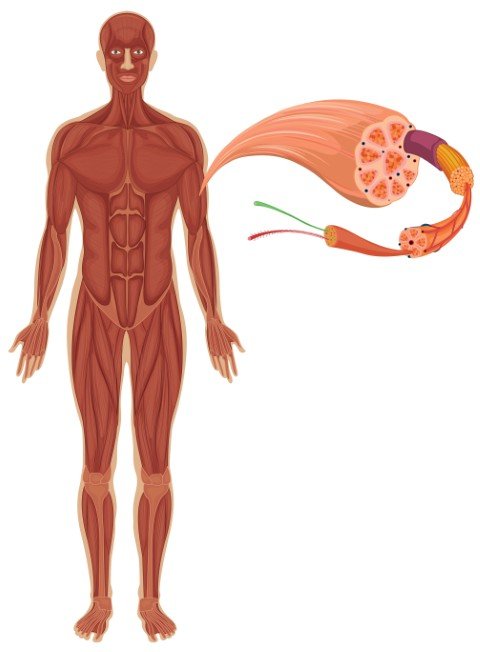
While skin is the largest organ in the body by surface area, muscle is the largest organ in the body by mass (weight), taking up to 30-50% of our total body mass depending on age, sex, and fitness level. While its performance benefits are obvious, skeletal muscle is an endocrine (hormone) organ with wide-reaching effects on the body—from metabolic function, hormonal regulation, and disease prevention. Did you know that?
One of the most important roles skeletal muscle plays is in glucose (sugar) metabolism. Your muscles do more than move you—they also process most of the sugar in your blood. In fact, over 75%1 of insulin’s work of clearing glucose happens in skeletal muscle, helping keep blood sugar and fats balanced and lowering the risk of type 2 diabetes.
Muscle mass plays a major role in how many calories we burn each day. Most of our metabolism comes from resting energy—the calories our body uses just to keep us alive—while digestion and exercise add smaller amounts. Unlike our brain, skin, and organs, which use about the same energy day to day, muscle metabolism can change a lot, making it a powerful factor in how efficiently we burn calories.
For example, the average muscle mass of a young, healthy man ranges from 77 to 110 lbs. An elderly woman, about 29 lbs. This means the energy released per day as a result of muscle protein synthesis can range from 485 calories per day (in the young man) to 120 calories per day (in an active elderly woman). Quite a difference!
Even small changes in muscle matter. Just 22 lbs. of lean mass can mean burning about 100 extra calories a day—adding up to more than 10 pounds of fat over a year. As one doctor puts it, “Muscle is truly valuable, and we need to maintain it as much as we can throughout our lives.”
The challenge is that muscle peaks in our 20s–40s, then steadily declines—about 0.5% per year in our 40s, 1–2% after 50, and up to 3% per year after 60. Without good nutrition and regular exercise2, this age-related muscle loss (sarcopenia) can lead to frailty, falls, and loss of independence—not just struggling to screw a lid off a jar, or walk a flight of stairs.
Frailty isn’t just an “old age” issue anymore—it’s showing up earlier in life, with more young and middle-aged adults3 becoming physically compromised4. That’s a troubling trend.
Research shows that people with low muscle mass have shorter survival rates, whether they’re older adults, hospitalized patients, or those with serious conditions like cancer or liver disease. They’re also more likely to face complications and longer hospital stays.
Why? Because skeletal muscle is the body’s main hub for protein and amino acid metabolism—essential for healing, strength, and resilience. During periods of stress, trauma, or illness, muscle can be broken down to supply the body with necessary proteins for immune function and tissue repair. Individuals with limited reserves of muscle mass respond poorly. This is why 50% of women 65 years old or older who break a hip in a fall never walk again.
HOW TO HOLD ON
Keeping muscle means starting early and staying proactive, because without action, age-related muscle loss is unavoidable.
The good news? Muscle loss can largely be avoided with a lifelong commitment to strength. Regular resistance training, paired with enough protein, is the foundation.
While cardio is important for heart health, resistance training does far more. It supports nearly every system in the body, helps maintain independence with age, and protects against chronic disease.
Strength training boosts your body’s energy powerhouses—your mitochondria. These tiny structures inside muscle cells turn food into usable energy, but they naturally decline as we age. That decline is linked to fatigue, slower metabolism, and a higher risk of chronic disease. Resistance training helps preserve and strengthen mitochondria, which means more energy, better endurance, and greater longevity.
It also keeps bones strong to prevent osteoporosis and fractures5, and even helps fight inflammation—a key driver of conditions like heart disease, arthritis, and Alzheimer’s. In short: building and maintaining muscle is one of the most powerful tools for long-term health.
It’s never too late to start. Even in adults aged 70 years or older have shown improvements in muscle strength and muscle mass within an 8–12-week training program. The body is truly an amazing piece of artistry.
One important caveat: It’s always better to start today. Not next week. Today. While you can always improve on where you are at a given point in time, once you start losing, it’s harder to get it back. Liken this to a retirement account analogy. It’s never too late to start saving. But if you start when you’re in your 50s, your retirement isn’t going to be what it is if you start in your 20s.
MY TOP 6 STRENGTH EXERCISES AS WE AGE
Fitness has always been at the center of my life—as an exercise physiologist, competitive athlete, and avid weight trainer, movement and performance have shaped my daily routine. It wasn’t until my late 30s, early 40s that I really started exploring skin health, and I was blown away by what the right ingredients and products can do. That discovery opened a whole new dimension of wellness for me, giving me a truly well-rounded perspective on overall health, bridging both body and skin.
If I had to pick just a few exercises to recommend anyone to perform, these six are it. They are compound exercises that improve muscle strength, bone, ligament, and tendon stimulation, and improve balance. You can Google any of these to learn how to properly execute the moves.
Squats | Chair Squats | Stability Ball Squats
Push-Ups (wall | knees | toes)
Plank (knees | toes)
Overhead Presses
Glute Bridge (or Deadlifts)
Rows
The hardest part is starting. It always is. In anything we do. It’s like I read somewhere, “Welcome to yoga. The hardest part is done! You’re here! Now, let’s get to work.” If quality of life matters to you, then this will matter too. The one thing weight training can do over anything else is give you independence as it directly transfers to our daily activities of living (i.e. putting away heavier dishes or pots in high cupboards, lifting bags of dog food in your grocery cart, making beds, carrying bags of groceries up or down stairs without being breathless, etc.) This is all due to strength training and everyone, absolutely everyone, needs to be doing it!
