
Health & Wellness
The Truth About Cellulite
Feb
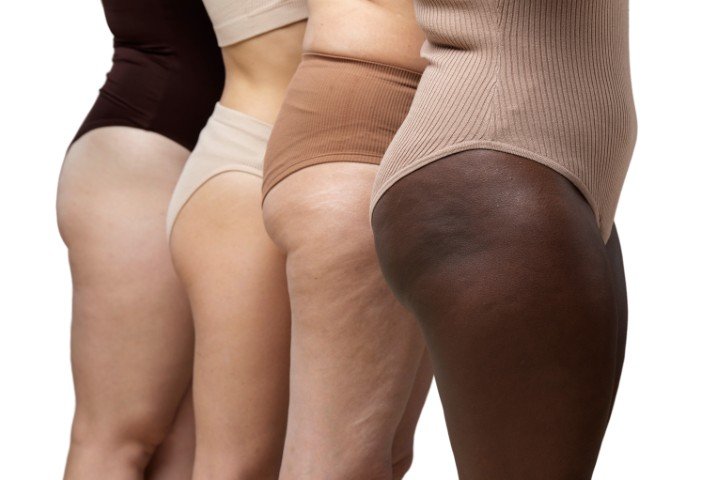
As we prepare for the “thaw” and the eventual shift into spring wardrobes, the skincare industry usually ramps up its marketing of a very specific “problem”: cellulite. But before you reach for a bottle of “firming cream,” let’s have a candid conversation about the history of this word. While the term appeared in French medical dictionaries in the late 19th century to describe inflammation, it wasn’t used to describe “dimpled skin” until much later. In fact, it was essentially a “created” condition popularized in the United States by a 1968 Vogue article. Before big beauty marketing got a hold of it, this texture was simply considered a normal biological trait of adult female skin—not a flaw to be “cured.”
The Physiology of Cellulite
The multibillion-dollar industry thrives on selling you the hope that a topical cream can dissolve fat or reorganize your anatomy, but the physiology simply doesn’t support the claim. The look of cellulite is caused by fibrous connective bands, called septae, that tether your skin to the underlying muscle. When fat cells between these bands push upward against the skin while the bands pull downward, you get that characteristic “dimpled” or orange-peel texture. Because this is a structural, subcutaneous issue, no cream, lotion, or potion can penetrate deeply enough to break those fibrous bands or permanently relocate the fat.
Big Beauty Marketing
Many of these expensive formulations rely heavily on caffeine, which is often touted as a miracle ingredient for “fat burning.” While caffeine, a common ingredient, is a vasoconstrictor and can temporarily dehydrate the fat cells, making the skin look slightly tighter or smoother for a few hours, the effect is entirely transient. It’s a “Cinderella effect”—once the caffeine wears off and the skin rehydrates, the structural reality remains unchanged. The industry relies on this temporary visual tweak to convince you the product is “working,” but it’s essentially just a topical trick that never addresses the root cause under the dermis.
Weight loss and Lipo
If we are being truly honest—and at Luxe Body Worx, I value clinical truth over marketing fluff—there are very few ways to actually alter the appearance of cellulite. Since the “dimple” is caused by the volume of fat pushing against those connective bands, significant weight loss can reduce the pressure and minimize the look of the texture. Beyond that, more invasive medical procedures like liposuction or subcision (where a doctor physically cuts the fibrous bands) are the only ways to structurally change the area. As an Exercise Physiologist, I know that while we can strengthen the muscle beneath to create a smoother foundation, the “texture” itself is a deep-seated reality of human biology.
In Closing
As we move into a season of “renewal,” I want to encourage you to renew your perspective. We can spend our energy and money chasing “Gold Standard” results from products that were never designed to work, or we can choose to stand in solidarity with our bodies as they are. At Luxe Body Worx, my goal is to provide you with the best botanical science for your skin’s health and resilience, not to sell you a miracle for a “condition” that was invented to make you feel less than. Let’s focus on nourishing the skin we have and leave the “miracle creams” on the shelf where they belong.
There’s also a video on this topic.
